
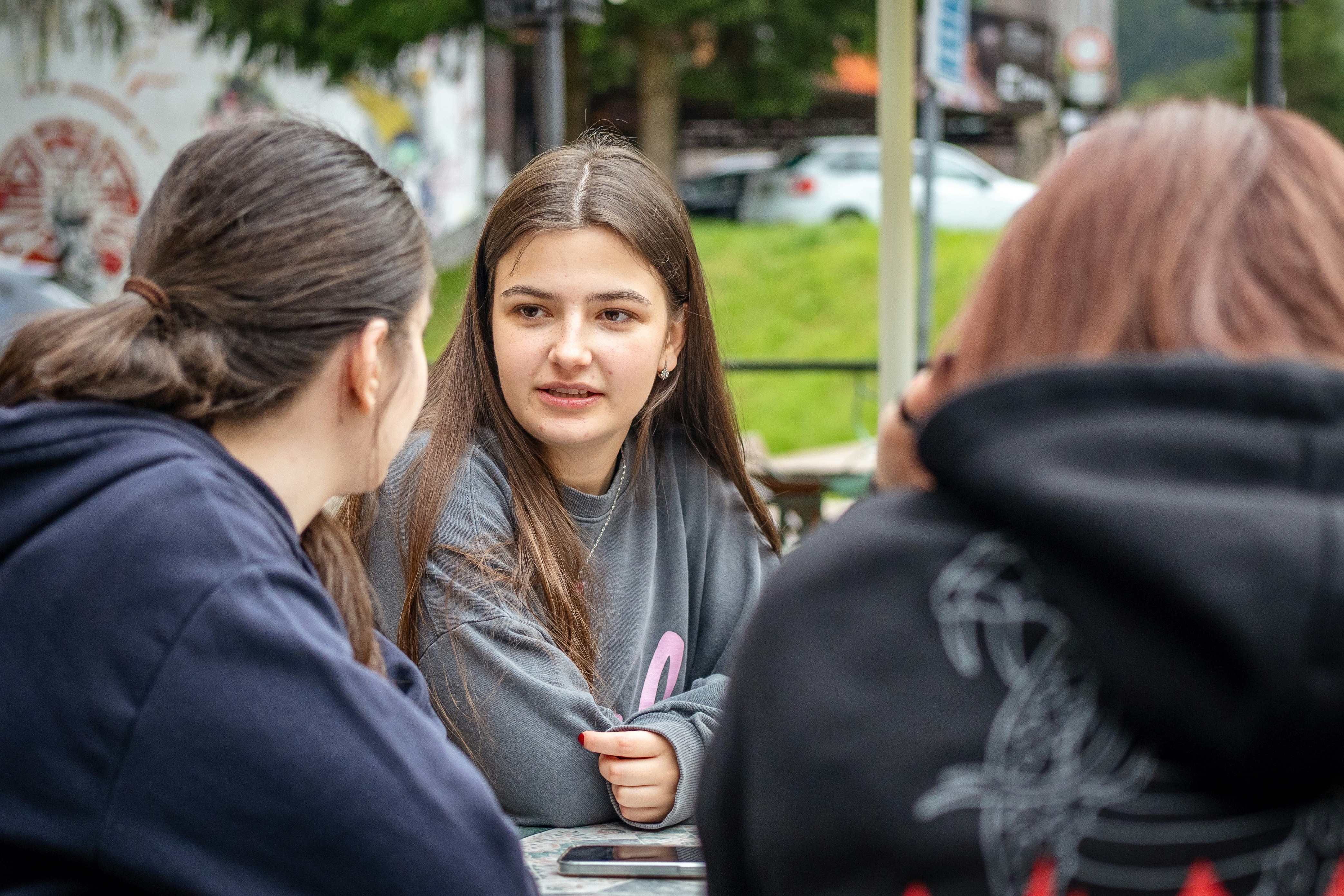
Before a campus team recruits a single volunteer, it needs to answer one question: what can a peer volunteer handle, and at what point does a trained staff member take over? Every other decision in a peer support programme, from training to supervision to the review, follows from that line.
This guide is for college counsellors, student affairs teams and university wellbeing leads planning a first pilot. It applies to campuses anywhere, and it flags the requirements that apply specifically in India.
This article is educational. It does not replace your institution's policies, legal advice or advice from qualified mental health professionals.
Decide where the volunteer role ends
Peer volunteers offer something staff cannot: a conversation with someone who shares the student's experience of campus life. They are not counsellors. A clear boundary protects students, and it also protects volunteers from carrying responsibility they are not trained for.
A workable rule for a pilot is that volunteers listen, offer information about campus services and help a student reach the right person. A trained staff member takes over whenever there is any sign of risk to safety, a disclosure of abuse or harassment, a concern about a mental health condition, or a problem the volunteer feels unable to manage.
Write this rule down in one page that every volunteer, supervisor and counsellor has read.
Set the purpose and define the role
Start with a purpose statement of one or two sentences. For example: "Peer volunteers provide a friendly first point of contact for students who want to talk, and help them reach the counselling service and other campus support."
Then define the role in practical terms:
- what volunteers do, such as listening, signposting and accompanying a student to the counselling centre
- what they do not do, such as assessing, advising on treatment or keeping a disclosure of risk to themselves
- where and when they are available
- who they report to and how
Recruit and select volunteers
Advertise openly, explain the commitment honestly and set out what selection involves. Look for students who listen well, can keep confidences, understand boundaries and are steady under pressure. An interview with a short role-play shows more than an application form.
Tell applicants who are not selected why the process exists. Some may be better suited to another wellbeing role, and a few may be students who need support themselves.
Train for listening, boundaries and referral
Training should be practical, with time to practise. A first course typically covers:
- active listening and responding without judgement
- the limits of the role and how to end a conversation well
- confidentiality, and the situations in which it must be broken
- recognising warning signs and making a handover
- looking after their own wellbeing, including how to debrief
Use role-plays based on situations volunteers are likely to meet, including ones where the right answer is to stop and call a supervisor.
Assign supervisors who can be reached
Every volunteer needs a named supervisor, usually a counsellor or a trained faculty member. During programme hours, a volunteer must be able to reach a supervisor quickly. Publish a rota so nobody has to guess who is on duty.
Hold regular group supervision, weekly during the pilot, to review difficult conversations without naming students, and offer individual debriefs after any handover.
Design handovers before you launch
Volunteers need three routes, and each should fit on a card they carry.
| Concern | What the volunteer does | Who takes over |
|---|---|---|
| Routine, such as stress or homesickness | Listens, offers information, suggests the counselling service | The student, with the volunteer's help to book |
| Urgent, such as talk of self-harm | Stays with the student and contacts the duty supervisor at once | The duty supervisor or counsellor |
| Out of hours | Follows the out-of-hours plan: campus security, emergency services or a helpline | Emergency services or the on-call contact |
If a student is at immediate risk, contact emergency services and the institution's on-call contact without delay. In India, Tele MANAS (14416) is available around the clock.
A referral scenario
Kabir, a second-year volunteer, is chatting with a first-year student after a peer support session. The student mentions that they have stopped eating properly and that "nothing feels worth it any more."
Kabir does not try to explore this further or offer advice. He says: "Thank you for telling me. I want to make sure you get proper support with this, so I'd like to call the counsellor on duty now. Can we do that together?" He stays with the student, phones the duty supervisor and waits until the supervisor arrives. Afterwards he records the handover as the programme requires and attends a debrief.
That is where the volunteer role ends: Kabir noticed, stayed and connected the student to a trained professional.
A sample four-week pilot plan
| Week | Focus | Checkpoint |
|---|---|---|
| 1 | Launch with a small group of trained volunteers in fixed hours and one location | Supervisor rota published; handover cards issued |
| 2 | Open sessions to all students; weekly group supervision begins | Any handover reviewed within a day |
| 3 | Gather quick, anonymous feedback from students who used the service | Volunteer workload and wellbeing checked |
| 4 | Pause new sessions for review; decide whether to extend, adjust or stop | Review report shared with the wellbeing lead |
Review the pilot without exposing students
Measure a small number of things well:
- participation: how many conversations took place, by time and place
- student feedback: whether students felt listened to and knew where to go next
- completed referrals: how many handovers led to a student actually reaching support
- volunteer workload: hours, difficult conversations and how volunteers are coping
Report figures in aggregate and remove anything that could identify a student, especially in small groups. Keep records of individual handovers in the counselling service's secure system, not in volunteer notes or group chats. Our guide to school counsellor documentation covers keeping records useful without recording more than you need.
What India-specific requirements apply?
In India, the Supreme Court's guidelines of 25 July 2025 in Sukdeb Saha v. State of Andhra Pradesh apply to all educational institutions, including colleges and universities. Among other things, they require institutions to:
- adopt and publish a mental health policy, reviewed annually
- appoint or engage at least one qualified counsellor, psychologist or social worker where 100 or more students are enrolled, and establish referral links where there are fewer
- set written protocols for immediate referral to mental health services, hospitals and suicide prevention helplines, and display helpline numbers, including Tele MANAS
- train all staff at least twice a year in psychological first aid, warning signs, response to self-harm and referral
- keep anonymised records and report annually on interventions, referrals and training to the relevant regulator
A peer programme should sit inside that framework, not alongside it. Volunteers complement the qualified counsellor; they do not replace one. Campuses elsewhere should check the equivalent rules in their own country.
A case example: Jamia Millia Islamia
Jamia Millia Islamia in New Delhi launched a Peer Support Volunteer Programme with the Society for the Promotion of Youth & Masses on 17 November 2026, according to the university's press release. Its design details include:
- an initial cohort of 40 volunteers selected from about 140 students who responded to an expression of interest
- training from counsellors and the university's psychology department
- volunteers working under the guidance of attached faculty mentors
- a WhatsApp-based helpline, with referral to a hospital or medical facility for cases beyond counselling and mentor support
The release describes the programme's launch and design, not its results. Read our news brief on the Jamia launch for a summary.
Frequently asked questions
Can peer volunteers counsel students?
No. Volunteers listen, share information and help students reach trained staff. Anything involving risk, abuse or a possible mental health condition goes to a trained staff member.
How many volunteers does a pilot need?
Enough to cover the hours you advertise without overloading anyone. Start small, with fixed hours and a supervisor on duty for every session.
What should a pilot review measure?
Participation, student feedback, completed referrals and volunteer workload, all reported in aggregate so no student can be identified.
Does a peer programme meet the Supreme Court's counsellor requirement in India?
No. The guidelines require a qualified counsellor, psychologist or social worker in institutions with 100 or more students. Peer volunteers add to that support.
Where formal training fits
A peer programme depends on the staff who train and supervise it. If you lead student wellbeing and want structured, assessed professional development in counselling practice in education settings, the Certified School Counsellor programme is one option. Check current pricing on the programme page.
Therapy Council certifications attest to the completion of training and assessment for professional upskilling. They are not a licence to practise clinical psychology, counselling or medicine.
Sources
- Jamia Millia Islamia, JMI and SPYM launch Peer Support Volunteer Programme and Wellness Connect Helpline App (press release, 18 November 2026)
- Supreme Court of India, Sukdeb Saha v. State of Andhra Pradesh, order dated 25 July 2025